


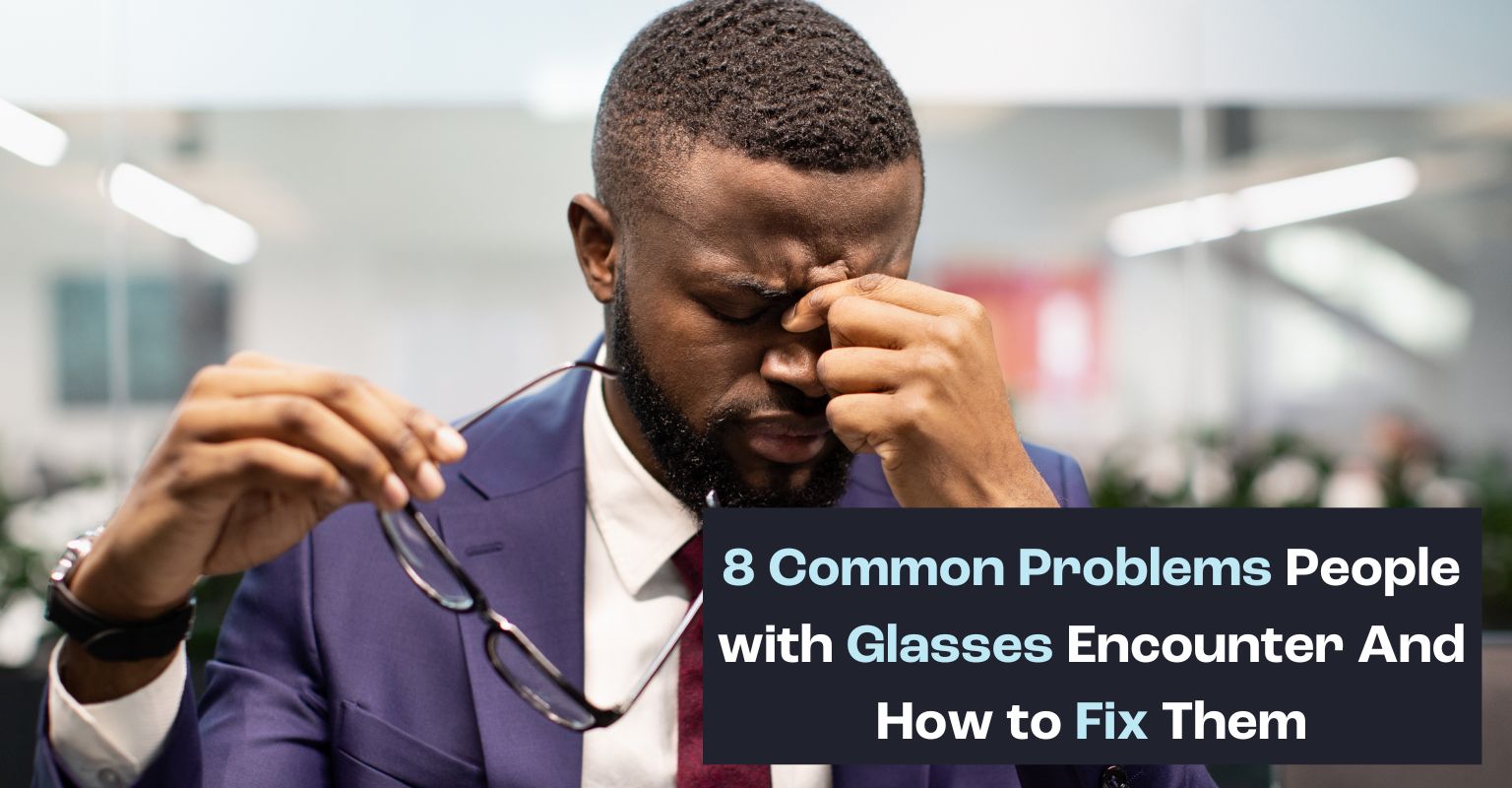
Wearing glasses should make your vision clearer and your daily life easier, but sometimes, prescription glasses can cause discomfort or unexpected issues. Most glasses problems and solutions are straightforward and require only simple adjustments. This guide takes a closer look at the eight most common eyeglasses issues and shows you how to fix each one.
If you need extra help, Vision Works offers expert fittings, accurate prescriptions, and eyewear advice you can trust.
1. Constant Headaches from Wearing Glasses
Headaches are one of the most common glasses complaints. If you’re experiencing problems with frequent headaches, they typically happen because:
- Your prescription is incorrect
- Your frames don’t fit properly
- You’re going through an adjustment period with new glasses
When your eyes work harder to focus or when frame pressure sits on your temples, headaches can appear quickly. Spending too much time with the wrong prescription can lead to muscle strain around the eyes and forehead.
Solution: Visit an eye doctor for a prescription check, get a professional frame adjustment, or allow a few days for your new pair of glasses to feel like second nature. Frequent headaches should not be ignored; they often signal that something needs adjusting. Your doctor can rule out other problems and confirm whether your lenses are correct.
2. Nose Pain and Red Marks
If your glasses leave red dents on your nose or feel uncomfortable after a few hours, you’re not alone. This usually happens when:
- Nose pads are too tight
- The weight of the frame isn’t distributed correctly
- The frames are too heavy
These pressure points on the nose bridge can cause real discomfort and pain over time.
Solution: Adjust the nose pads so they fit properly, switch to a lightweight frame, or try plastic frames that rest more comfortably. A simple adjustment can eliminate nose pain. If pressure persists, ask your eye doctor about different frame possibilities that suit your face shape.
3. Glasses Keep Slipping Down Your Face
Few things are more frustrating than glasses that constantly slide down, especially when you’re busy with work or daily activities. This happens when:
- The temples are too loose
- The frame size isn’t right
- Oily skin reduces grip
Solution: Tighten the temple arms, ask for added grip on nose pads, or try frames designed with better support. Increasing temple support or adjusting the fit can solve this quickly at your nearest Vision Works store. An eye doctor can also recommend frames that stay secure during physical activity.
4. Blurry Vision Even While Wearing Glasses
Blurry vision while wearing glasses is a sign that something isn’t right. If you’re experiencing vision problems, common causes include:
- Outdated prescription
- Old lenses that are scratched or dirty
- Lenses that aren’t the correct type for your needs
Vision changes over time, and even quality lenses lose clarity after years of use. Holding onto old glasses when your eyesight has changed only makes things worse.
Solution: Schedule an eye test to update your prescription, replace old lenses, clean them properly, or switch to more suitable lenses such as progressive lenses or high index lenses. Your eye doctor can determine whether your current eyeglasses still meet your needs.
Contact lenses may also be an option if glasses aren’t providing clear vision. Refractive errors change over time, and your glasses should change with you.
5. Eye Strain from Computer Work and Screen Time
Digital eye strain is common today, particularly for those who spend many hours on computers or smartphones. If you’re experiencing problems with eye strain, symptoms include:
- Tired eyes and difficulty maintaining focus
- Headaches after screen use
- Overall discomfort and muscle strain around the eyes
This can result from an outdated prescription, blue light exposure, or glare from your computer screen. Too much time in front of screens without breaks affects both comfort and eye health in the long run.
Solution: Follow the 20-20-20 rule – every 20 minutes, look at something 20 feet away for 20 seconds. You can also upgrade to blue light glasses, check your prescription with an eye doctor, and reduce glare with an anti-reflective coating on your lenses. Addressing digital eye strain improves your quality of life at work and home.
6. Ear Pressure and Temple Discomfort
If the sides of your head or the top of your ears ache after you wear glasses, the temples are likely too tight, or the frame size isn’t right. Constant pressure leads to irritation and pain around the ears. This can also cause headaches that radiate from the temples.
Solution: Adjust the temple tension, try frames with flexible arms, or increase support to distribute pressure more evenly. Properly fitted frames should feel secure, not painful. An eye doctor can help you explore frame possibilities that work for your head shape. A lightweight frame may also reduce pressure on sensitive areas.
7. Glare from Screens, Bright Lights, and Car Windows
Glare can make vision uncomfortable and even unsafe, particularly when driving or during computer work. It often occurs when lenses lack anti-reflective coating or when sunglasses don’t offer proper UV light protection.
Solution: Add an anti-reflective coating to reduce glare, upgrade to UV-protected sunglasses for outdoor use, and consider specialised lenses for driving or night glare. Blocking harmful UV light protects your eye health in the long run. Your eye doctor can recommend the best solution for your lifestyle.
8. Neck Strain and Poor Posture from Bifocals
If you wear bifocals or progressive lenses, you may notice you tilt your head for close-up tasks. This awkward positioning causes neck strain and tired muscles over time.
Solution: Try no-line bifocals for smoother transitions, ensure your progressive lenses are fitted with accurate measurements, or explore alternative lens designs with your doctor. A proper fitting makes a significant difference. If you continue experiencing problems, discuss other lens possibilities with your eye doctor.
When to See an Eye Doctor
Not all glasses problems can be solved with simple adjustments. Book an eye test if you experience:
- Persistent vision problems that affect daily life
- Symptoms that don’t improve with new glasses
- Dry eye syndrome or long-term discomfort
- Concerns about cataracts, glaucoma, or other eye health issues
Regular eye tests help prevent many eyeglasses problems before they begin. Your doctor can catch changes in your vision early and recommend the right lenses for your needs.
Book an eye test
Don’t wait, secure your appointment now and see the world in a whole new way. Book your eye test today!
Tips to Prevent Glasses Problems
A few habits can help you avoid discomfort and keep your eyeglasses in good condition:
- Schedule an eye test every 1–2 years with your eye doctor
- Keep lenses clean for clear vision
- Store your pair of glasses safely when not wearing them
- Get adjustments at the first sign of discomfort
- Consider owning a second pair for different activities
- Replace old glasses before vision problems develop
Small habits can prevent bigger problems and protect your eye health in the long run.
Ready to Solve Your Glasses Problems?
If your glasses are causing pain, discomfort, or vision problems, Vision Works can help. Visit us for expert adjustments, quality lenses, and accurate prescriptions designed for your lifestyle.
Book an eye test today or visit your nearest Vision Works store for the best solution to your eyewear needs.