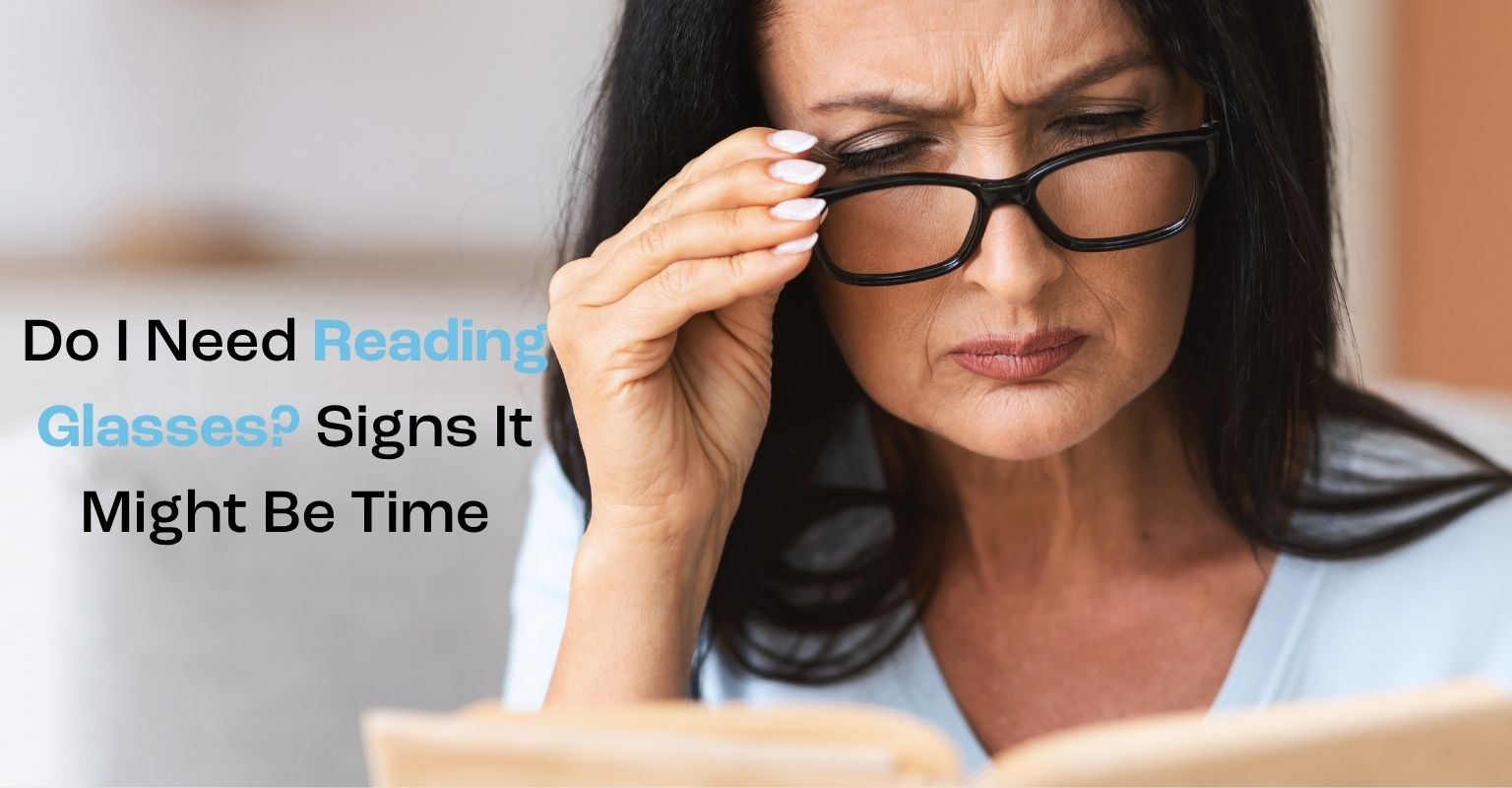
Have you noticed yourself holding your phone further away to read a text message or struggling to read a restaurant menu in dim light? If so, you may be wondering: do I need reading glasses?
The good news is that this is a very normal part of ageing. Most adults begin noticing changes in their up-close vision during their 40s. Needing reading glasses doesn’t mean your eyes are failing, it simply means your eyes are changing naturally with age.
In this article, we’ll look at the common signs you might need reading glasses, explain the difference between readers and prescription glasses, and help you decide when it’s time to book an eye test.
What Are Reading Glasses?
Reading glasses are lenses designed to help you see clearly at close distances. They make it easier to read books, use your phone, work on a computer, or focus on small print.
- As we age, the natural lens inside the eye becomes less flexible. This condition is called presbyopia. It affects almost everyone eventually and usually starts between the ages of 40 and 50.
- Unlike prescription glasses, over-the-counter reading glasses typically have the same magnification power in both lenses. They are available in standard strengths such as +1.00, +1.50, and +2.00.
- Prescription glasses, on the other hand, are customised to your individual vision needs. They can correct differences between your eyes, astigmatism, and distance vision problems as well.
- Many South Africans start with a simple pair of reading glasses before later moving to prescription eyewear or multifocal lenses if their vision needs change.
Signs You Might Need Reading Glasses
It’s not always obvious when your vision starts changing. The symptoms often appear gradually, which is why many people ignore them at first.
Here are some common signs that it may be time to consider reading glasses:
You’re Holding Your Phone Further Away
One of the earliest signs of presbyopia is stretching your arms further out to focus on text messages or emails.
If your “long arms” suddenly don’t seem long enough, your eyes may be struggling with close-up focus.
Small Print Has Become Difficult to Read
Medicine labels, restaurant menus, price tags, and book pages may start looking blurry or harder to focus on.
You may also notice yourself enlarging text on your phone or increasing font sizes on your computer.
You Squint to Focus on Close Objects
Squinting temporarily changes the way light enters the eyes, which can improve focus for a moment.
If you find yourself squinting regularly while reading, your eyes could be compensating for changes in near vision.
Frequent Headaches After Reading or Screen Time
Eye strain from trying to focus can cause headaches, especially after long periods of reading or computer work.
These headaches are often felt around the forehead or behind the eyes.
Your Eyes Feel Tired at the End of the Day
Many people with early presbyopia notice tired, dry, or uncomfortable eyes after spending hours working on close tasks.
This is especially common for office workers who spend long hours in front of screens.
Blurred Vision When Switching Focus
You may notice blurry vision when looking from something far away to something up close.
For example, checking your phone after driving may take a few seconds longer to focus clearly.
You Need Brighter Light to Read Comfortably
If you constantly switch on extra lights to read menus or books, your eyes may need help focusing at close range.
Difficulty reading in dim lighting is one of the most common signs people notice first.
Reading Glasses vs Prescription Glasses: What’s the Difference?
Many people are unsure if they should buy reading glasses from a pharmacy or visit an optometrist for prescription glasses.
The answer depends on your eyes and your specific vision needs.
Over-the-Counter Reading Glasses
Pharmacy reading glasses are designed with equal magnification in both lenses.
They can work well for people with:
- Similar vision in both eyes
- Mild presbyopia
- No astigmatism or distance vision problems
They are affordable, convenient, and useful for occasional reading.
Prescription Glasses
Prescription glasses are tailored specifically for your eyes.
An optometrist measures:
- Your exact prescription
- Differences between the left and right eye
- Astigmatism
- Distance and near vision requirements
Prescription lenses often provide better comfort and clearer vision, especially if you wear glasses regularly.
Multifocal Lenses
Multifocal lenses are ideal for people who need help with both distance and reading vision.
Instead of switching between two pairs of glasses, multifocals allow you to see clearly at multiple distances using one pair of eyewear.
Many adults over 40 eventually choose multifocal lenses for convenience.
When to Book an Eye Test Instead of Buying Readers
A simple pair of reading glasses may solve mild near vision problems, but there are times when it’s important to book an eye test instead.
You should schedule an appointment with an optometrist if:
- You’ve never had an eye test before
- It’s been over two years since your last check-up
- You struggle with both distance and close-up vision
- You notice symptoms in only one eye
- You see halos around headlights at night
- You experience frequent headaches or severe eye strain
- You have a family history of glaucoma or cataracts
An eye test does plenty besides determining whether you need reading glasses.
It can also help detect eye conditions such as:
- Glaucoma
- Cataracts
- Macular degeneration
- Diabetic eye disease
Some of these conditions develop gradually and may not cause obvious symptoms in the early stages. That’s why regular eye examinations remain an important part of overall eye health.
Book an eye test
Don’t wait, secure your appointment now and see the world in a whole new way. Book your eye test today!
Choosing the Right Pair of Reading Glasses
If you’re shopping for reading glasses, choosing the right pair can make a big difference in comfort and clarity.
Here are a few helpful tips:
Start With a Lower Magnification
If you’re unsure which strength you need, begin with a lower magnification and increase gradually if necessary.
Using lenses that are too strong can cause discomfort and headaches.
Think About Your Daily Activities
Different tasks may require different reading distances.
For example:
- Reading books requires closer focus
- Computer work needs intermediate vision
- Sewing or detailed hobbies may need stronger magnification
An optometrist can help determine what works best for your lifestyle.
Choose Quality Lenses
Cheap lenses can distort vision or cause unnecessary eye strain.
Good-quality lenses provide clearer vision and more comfortable wear.
Pick Frames That Suit Your Lifestyle
Comfort counts just as much as style.
Choose frames that:
- Fit properly
- Feel lightweight
- Suit your face shape
- Match your daily activities
Modern eyewear offers plenty of stylish options for every age and lifestyle.
Ask About Lens Enhancements
Depending on your screen use and lifestyle, your optometrist may recommend:
- Blue light protection
- Anti-reflective coatings
- Scratch-resistant coatings
- Lightweight lenses
These features can improve comfort and durability.
Book an Eye Test at Vision Works
Needing reading glasses is a natural part of life and one of the most common vision changes adults experience. The earlier you address symptoms like blurred vision, eye strain, or headaches, the easier it is to stay comfortable and protect your long-term eye health.
At Vision Works, experienced optometrists can help determine whether you need reading glasses, prescription lenses, or multifocal eyewear tailored to your needs. With stores across Johannesburg, Pretoria, Cape Town, Durban, and Gqeberha, help is never far away.
If you’ve been asking yourself, “Do I need reading glasses?”, booking a professional eye test is the best next step.