


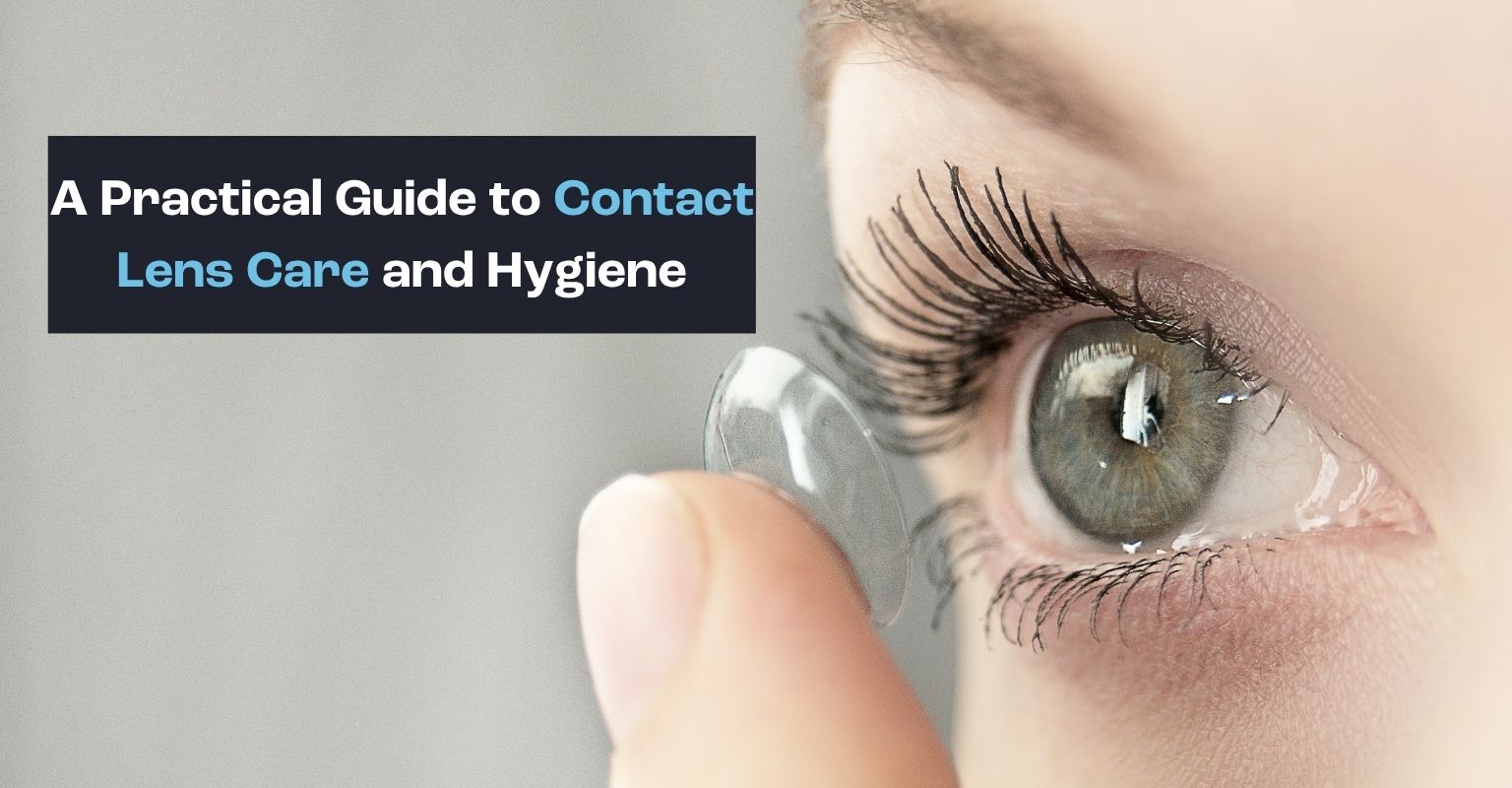
Contact lenses are one of the easiest ways to correct your vision, but because they’re so convenient, it’s also easy to get the daily routine wrong. The reality is that contact lenses are medical devices, and how you clean and store them directly affects your eye health.
Good contact lens care doesn’t have to be complicated. It just needs to be consistent. In this guide, we’ll walk you through how to clean contact lenses properly, how to care for your lens case, how to avoid common mistakes, and when to seek help if something doesn’t feel right.
This advice applies to both soft contact lenses (including daily disposables) and rigid gas permeable lenses, with a few differences noted along the way. If you’re still weighing up your options, our guide on contact lenses vs glasses is a good place to start.
How to Clean Contact Lenses the Right Way
Getting your cleaning routine right is the foundation of good contact lens hygiene.
Step-by-step: how to clean contact lenses
1. Wash and dry your hands Use plain soap (no oils or fragrances) and dry with a lint-free towel.
2. Remove one lens at a time Start with the same eye every day to avoid mixing lenses.
3. Place the lens in your palm Add a few drops of fresh contact lens solution.
4. Rub the lens gently Use a back-and-forth motion for about 20 seconds on each side.
5. Rinse with fresh solution This helps remove loosened deposits and debris.
6. Store in a clean case with fresh solution Never top up old solution, always replace it completely.
7. Repeat with the second lens
Even if your solution says “no rub,” the rub and rinse step is still important. It physically removes protein build-up and bacteria from the lens surface. The Centers for Disease Control and Prevention also recommends rubbing and rinsing lenses as part of a proper cleaning routine.
If you wear daily disposable contact lenses, you can skip cleaning entirely, just discard them after each use.
Understanding Contact Lens Solutions
Not all solutions do the same job. Knowing what you’re using is an important part of proper contact lens care systems.
The main types of contact lens solution
- Multipurpose solution: The most common option. It cleans, rinses, disinfects, and stores soft contact lenses.
- Hydrogen peroxide-based systems: Offer deep cleaning and are useful for sensitive eyes. These must be used with a special neutralising case.
- Saline solution: Used only for rinsing. It does not disinfect lenses and should be paired with a proper cleaning system.
Safe solution habits
- Always check the expiration date
- Never transfer solution into smaller containers
- Avoid touching the bottle tip to any surface
- Never share your solution with anyone
If you wear rigid gas permeable lenses, you’ll need a different care system. Your optometrist can guide you on the correct products.
Don’t Overlook Your Contact Lens Case
Your contact lens case plays a bigger role than you might think. A dirty case can contaminate even properly cleaned lenses.
How to keep your contact lens case clean
- Empty old solution every morning
- Rinse the case with fresh solution (never tap water)
- Wipe with a clean tissue
- Leave the case open and upside down to air dry
Using tap water introduces bacteria that can lead to serious eye infections. Research has linked contaminated cases to conditions like microbial keratitis.
How often should I replace my contact lens case?
Replace your contact lens case at least every three months.
If it looks cloudy, cracked, or worn, replace it sooner. An old case can undo your entire cleaning routine by reintroducing bacteria to your lenses.
Daily vs Monthly Lenses: Getting Your Replacement Schedule Right
Different lenses require different habits. Understanding your replacement schedule is essential for safe contact lens wear.
Common lens types
- Daily disposable lenses: Worn once and thrown away. No cleaning or storage needed.
- Bi-weekly or monthly lenses: Cleaned and stored each night. Must be replaced on schedule.
- Rigid gas permeable lenses: Longer-lasting but require daily care and regular check-ups.
Replacement schedules are not suggestions, they are the maximum safe wear time.
Stretching the life of your lenses to save money can lead to discomfort and protein build-up, as well as an increased risk of infection.
A helpful tip: set a reminder on your phone or change lenses on the same day each week.
Common Contact Lens Mistakes to Avoid
Even experienced wearers can fall into habits that affect contact lens hygiene.
Avoid these common mistakes
- Sleeping in lenses (unless prescribed): Reduces oxygen to the cornea and increases infection risk.
- Wearing lenses in water: Swimming pools and hot tubs expose lenses to harmful microbes, and showers carry similar risks.
- Topping up old solution: Weakens disinfecting power and encourages bacteria growth.
- Sharing contact lenses: Transfers bacteria and increases the risk of eye infection.
- Applying makeup before lenses: Leads to product buildup on the lens surface.
- Wearing lenses past their replacement date: Causes deposits and irritation.
- Rinsing lenses with anything other than solution: Saliva or water can introduce contamination.
If you accidentally fall asleep in your lenses, remove them when you wake up, use rewetting drops, and monitor for redness or discomfort.
Book an eye test
Don’t wait, secure your appointment now and see the world in a whole new way. Book your eye test today!
Signs of an Eye Infection and When to See Your Optometrist
A contact lens-related eye infection can develop quickly, so it’s important to act early.
Watch for these symptoms
- Redness or pain in one or both eyes
- Blurred or hazy vision
- Sensitivity to light
- Excessive tearing or discharge
- A gritty feeling in the eye
If you notice any of these
- Remove your contact lenses immediately
- Switch to glasses
- Monitor symptoms closely
If symptoms persist for more than a few hours, or if you experience pain or vision changes, seek professional care. Serious conditions like keratitis or corneal ulcers can progress quickly, so don’t wait.
You can book an eye test with an optometrist at Vision Works for a full assessment and guidance.
Routine annual eye tests are also an essential part of maintaining good eye health, even if everything feels fine.
Keep Your Contact Lens Wear Safe and Healthy
Good contact lens care comes down to a few simple habits: clean hands, fresh solution, a clean case, and sticking to your replacement schedule.
These small daily actions protect your eyes and keep your vision clear.
If you’re due for a check-up, or if something about your lenses doesn’t feel right, visit Vision Works. With branches in Johannesburg, Pretoria, Cape Town, Durban, and Gqeberha, help is always nearby.
Book your eye test and keep your contact lens wear safe, comfortable, and healthy.