


Vision Works Journal / Eye Health
Night Driving –
Why Your Eyes Struggle
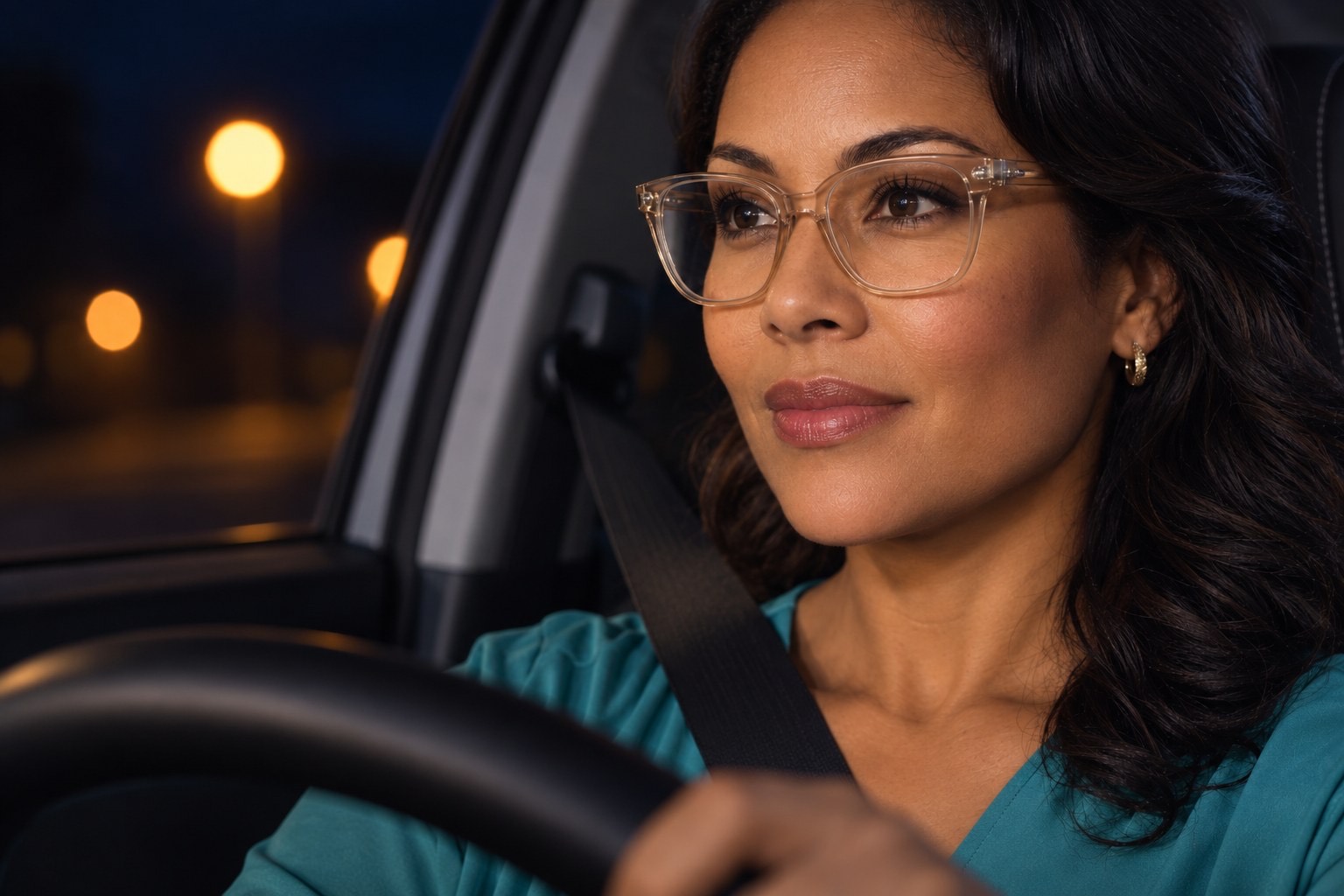
If driving at night feels more difficult than driving during the day, you’re not imagining it.
Perhaps oncoming headlights seem excessively bright, road markings become harder to see, or you find yourself concentrating much harder than usual. Some people notice halos or starbursts around lights, while others simply feel that everything becomes less clear once the sun goes down.
Your eyes face very different visual demands in darkness than they do in daylight. Reduced light, glare from headlights and streetlights, reflections from wet roads, fatigue and even dry eyes can all make night driving more challenging. And sometimes, increasing difficulty with night driving can be an early indication that your spectacle prescription has changed or that an underlying eye condition needs attention.
Understanding why night vision is different – and what you can do to improve it – can make driving after dark safer and more comfortable.
What Darkness Does to Your Vision
Your Pupils Become Larger
When light levels fall, your pupils dilate to allow more light into your eyes. While this helps you see in darker conditions, a larger pupil can also make small refractive errors and optical imperfections more noticeable.
This is one reason why someone who sees perfectly well during the day may notice slight blur, halos or starbursts around headlights at night. An outdated or inaccurate spectacle or contact lens prescription can become particularly noticeable when driving after dark.
Contrast Sensitivity Decreases
Good vision isn’t only about being able to read small letters on an eye chart. Contrast sensitivity – your ability to distinguish an object from its background – is also extremely important. In daylight, a pedestrian, cyclist, pothole or object on the road may stand out clearly from its surroundings.
At night, those differences become much less obvious. Reduced illumination makes it harder to distinguish subtle changes in contrast, which means hazards can be more difficult to detect, particularly on poorly lit roads.
This is one of the reasons night driving requires more concentration than driving during daylight hours.
Glare Becomes More Noticeable
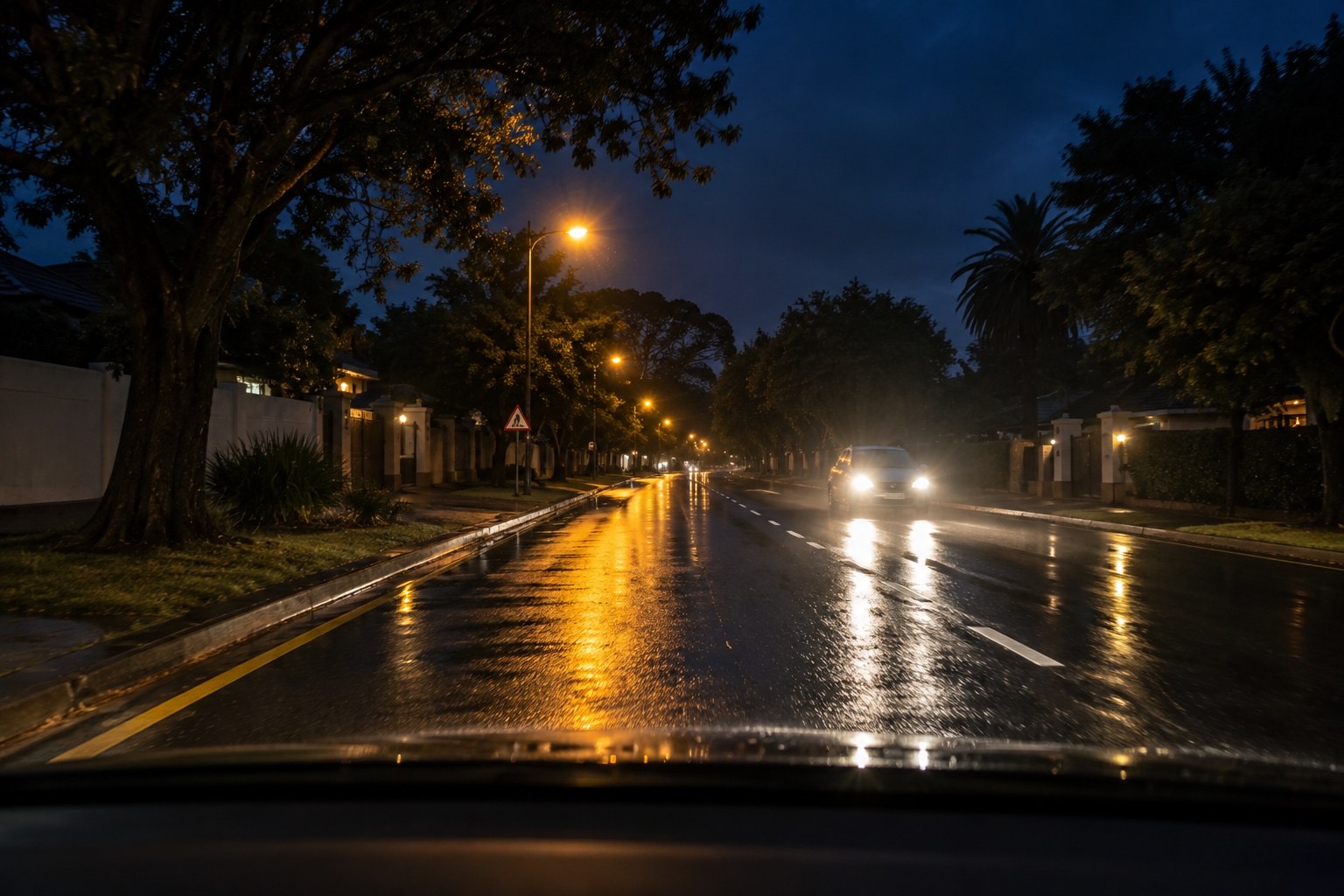
Oncoming headlights, streetlights and illuminated signs create bright points of light against an otherwise dark environment. Your eyes constantly have to deal with the difference between these bright lights and the darker road ahead. Glare can temporarily reduce visual comfort and make it harder to see lower-contrast objects around the light source.
Wet roads can make the situation even more difficult. Water on the road surface reflects headlights and streetlights, creating additional glare and reflections. A dirty windscreen or dirty spectacle lenses can make matters worse by scattering light and increasing distracting reflections.
Want to know more about the effect darkness has on your eyes? Ask your nearest optometrist.
Why Do Headlights Seem So Bright?
Modern vehicle headlights can appear extremely bright, particularly when approaching from the opposite direction. The problem isn’t necessarily that your eyes are “too sensitive”. At night, your visual system is trying to function in low illumination while simultaneously dealing with intense points of light.
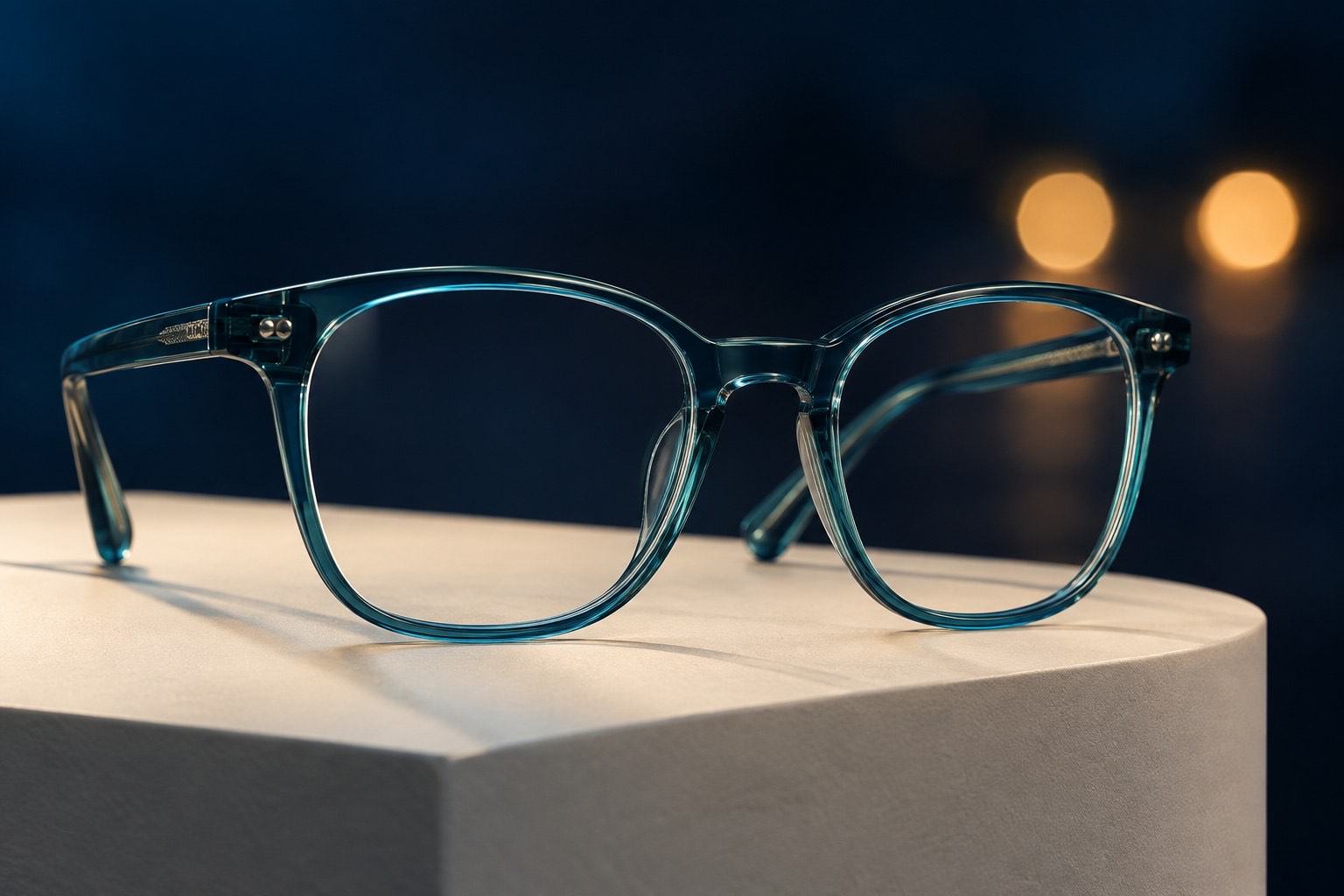
Larger pupils can also make optical aberrations more noticeable, which may contribute to halos, glare and starbursts around lights. If you wear spectacles, reflections from the front and back surfaces of your lenses can add another layer of distracting light. A good-quality anti-reflective coating can reduce these lens-surface reflections and may provide clearer, more comfortable vision when driving at night.
What does Anti-Reflective Coating do? Visit your nearest optometrist.
Your Prescription Matters More Than You Think
Even a relatively small uncorrected refractive error can become more noticeable in low-light conditions. Myopia, astigmatism or an outdated prescription may cause headlights and streetlights to appear blurred, stretched or surrounded by halos.
This is why someone may feel that their daytime vision is perfectly acceptable but struggle significantly when driving after dark. If you haven’t had your eyes examined recently – particularly if you’ve noticed a change in your night vision – it may be time to have your prescription checked.
Dry Eyes Can Affect Night Driving Too
Your tear film forms the first optical surface that light passes through when entering your eye. When that tear film becomes unstable, vision can fluctuate and lights may appear less clear. Concentrating on the road can reduce how frequently or completely you blink.
Air conditioning, heating and air vents directed towards your face can also increase tear evaporation. Contact lens wearers and people who already experience dry-eye symptoms may notice this even more.
If your vision seems to clear temporarily after blinking, or your eyes feel gritty, tired, burning or watery while driving, dry eye may be contributing to the problem. Your optometrist can assess your tear film and recommend appropriate management if necessary.

Age Can Change Night Vision
Night driving often becomes more challenging as we get older. Changes within the eye can increase sensitivity to glare and reduce visual performance in low-light conditions. Cataracts, for example, can scatter incoming light and make headlights appear surrounded by glare, halos or starbursts.
Some people first become aware of cataract-related visual changes because driving at night becomes uncomfortable. Other eye conditions can also affect night vision. A noticeable deterioration in your ability to drive at night should therefore not simply be dismissed as “getting older”. It is worth having your eyes examined.
Making Night Driving More Comfortable
Keep Your Prescription Up to Date
Clear night vision starts with accurate vision correction. Regular eye examinations ensure that myopia, hyperopia and astigmatism are properly corrected and also give your optometrist an opportunity to assess your overall eye health.
Consider Anti-Reflective Lenses
If you wear spectacles, a quality anti-reflective coating can reduce reflections from the surfaces of your lenses. This can be particularly helpful when dealing with headlights, streetlights and illuminated dashboards.
Importantly, anti-reflective lenses are not the same as tinted “night-driving glasses”. Tinted or yellow lenses reduce the amount of light reaching the eye. In already dark conditions, reducing available light may actually make it more difficult to see. For night driving, clear lenses with an accurate prescription and a quality anti-reflective coating are generally the better option.
Keep Your Windscreen and Lenses Clean
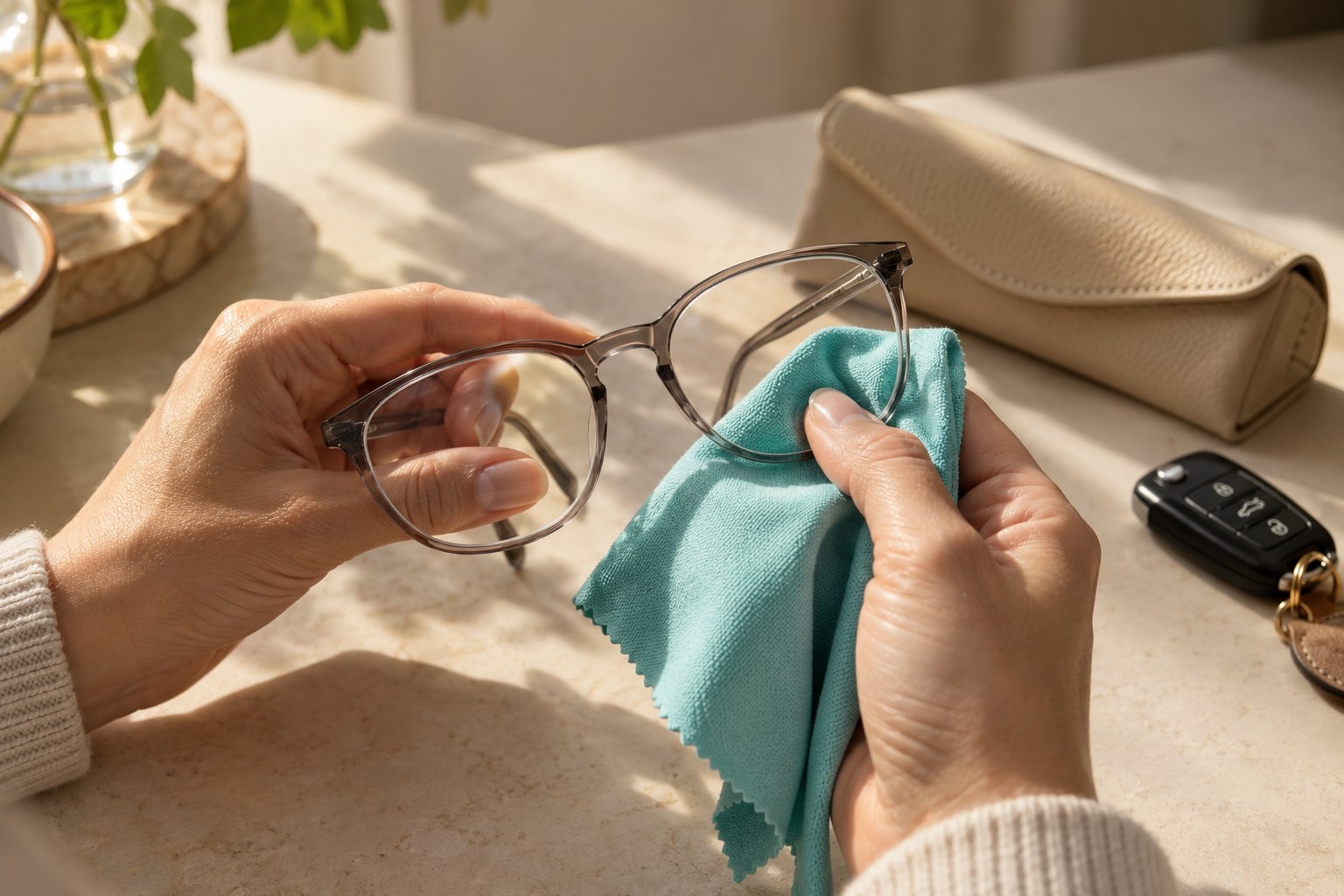
It sounds simple, but it can make a noticeable difference. Dust, fingerprints, smudges and residue scatter light and can increase glare. Clean both the inside and outside of your windscreen regularly, make sure your windscreen wipers are in good condition, and keep your spectacle lenses clean and free from smears.
Reduce Distracting Light Inside the Car
A very bright dashboard or infotainment display creates additional light inside the vehicle. Reduce dashboard brightness to a comfortable level while still ensuring that all necessary information remains clearly visible. This can make it easier for your eyes to deal with the darker road environment ahead.
Don’t Look Directly at Oncoming Headlights
When approaching vehicles have particularly bright headlights, avoid staring directly into them. Keep your attention on your lane and the road ahead while maintaining safe awareness of surrounding traffic.
Manage Dry-Eye Symptoms
If dry eye affects your vision or comfort while driving, speak to your optometrist about suitable management. Also try to avoid directing air-conditioning or heating vents directly towards your eyes and remember to blink normally and completely.
At Vision Works, we’re here to help you feel more confident behind the wheel after dark. Visit us for a comprehensive eye examination and advice tailored to your vision.
When Should You Have Your Eyes Checked?
Occasional difficulty with glare doesn’t necessarily mean that something is wrong with your eyes. However, you should consider having an eye examination if you notice:
- Night driving has become noticeably more difficult.
- Headlights suddenly seem much brighter than before.
- You experience significant halos or starbursts around lights.
- Road signs or markings are becoming harder to see.
- You find yourself avoiding driving at night because you don’t feel confident in your vision.
- One eye appears to see noticeably better than the other.
- Your vision remains blurred even with your current spectacles or contact lenses.
Changes in night vision can sometimes be the first indication that your prescription needs updating or that an eye condition requires further investigation.
Don’t Accept Poor Night Vision as Normal
Driving at night places greater demands on your visual system, but that doesn’t mean you simply have to accept uncomfortable glare or unclear vision. An accurate prescription, appropriate spectacle lenses, a healthy ocular surface and regular eye examinations can all contribute to better visual comfort after dark.
If you’re finding night driving increasingly difficult, book a comprehensive eye examination at your nearest Vision Works practice. Sometimes, a relatively small change in your vision correction can make a surprisingly big difference when the sun goes down.
Love your eyes. After dark, too.
Let’s talk about your night vision.
Book a comprehensive eye examination at your nearest Vision Works practice.